What SOC Hiring Managers Test For In Interviews
March 2026
The cybersecurity field now reports a skills crisis, not a headcount crisis. 59% of organisations cited critical or significant skills needs in 2025, up sharply from 44% the year before (ISC2, 2025). The problem is not a shortage of people applying for SOC roles. It is a shortage of people who can do the work.
SOC hiring managers shared what they look for when building security teams today. Their answers reveal a consistent picture, and one finding will surprise most candidates who have been preparing the wrong way.
Get practical career content delivered to your inbox. Subscribe to CyberDesserts for weekly security insights without the noise.
Why Soft Skills Now Outrank Technical Skills in SOC Hiring
The 2025 ISC2 Cybersecurity Workforce Study asked hiring managers to name the skills they prioritise. The top five were all nontechnical: problem solving (29%), collaboration (24%), communication (22%), willingness to learn (20%), and strategic thinking (16%) (ISC2, 2025).
That finding deserves a moment. Not cloud security, not SIEM experience, not certifications. Soft skills, first through fifth.
I put the question directly to hiring managers: what separates standout SOC candidates from the rest? Their answers confirmed it. Soft skills come first. Omer Malik, CEO at ORM Systems, puts it directly: the difference between certified and capable candidates becomes clear quickly during practical tests. Candidates who know tools by name but cannot walk through an alert step by step do not make the cut.
What Technical Skills Get You Past the First Round
The soft skills finding does not mean technical ability is irrelevant. It means technical fluency is the floor, not the ceiling.
Real log analysis is the non-negotiable. Malik describes it as the single most important technical skill in the room: look at firewall logs, endpoint alerts, or authentication records and quickly identify what is normal and what looks suspicious. Tool familiarity is not enough. Hiring managers test whether you can operate under real conditions, not describe how you would.
Chandra Sekhar Muppala, Senior Manager for Cybersecurity and Operations at Infosprint Technologies, adds hands-on XDR and SIEM experience. Operational familiarity in structured environments separates candidates who have actually used these platforms from those who have only read about them.
Ilia Mogilin, Security Operations Engineer, goes further. He looks for programming ability, not in a specific language, but as a signal of how an analyst thinks. SOC work is increasingly automated. Analysts who can understand, modify, and write basic scripts bring significantly more value than those who cannot.
If you are building these skills now, the ELK Stack Security Monitoring Tutorial gives you a real SIEM environment to work in, which is exactly the kind of hands-on context that comes up in technical interviews.
How MITRE ATT&CK Knowledge Helps You in a SOC Interview
MITRE ATT&CK came up across multiple responses, and Muppala names it as the X-factor that separates strong candidates from the shortlist.
The reason is straightforward. ATT&CK gives you a shared vocabulary with whoever is interviewing you. When you can map what you see in a log to a specific tactic or technique, you demonstrate analytical maturity that tool knowledge alone does not show. It signals that you think like an attacker, which is exactly the perspective a SOC team needs.
In practice, this surfaces in two ways during interviews. First, in walk-through scenarios where you analyse an alert and explain what might be happening. Second, in questions about specific attack chains, where ATT&CK knowledge lets you connect individual events to broader attacker behaviour.
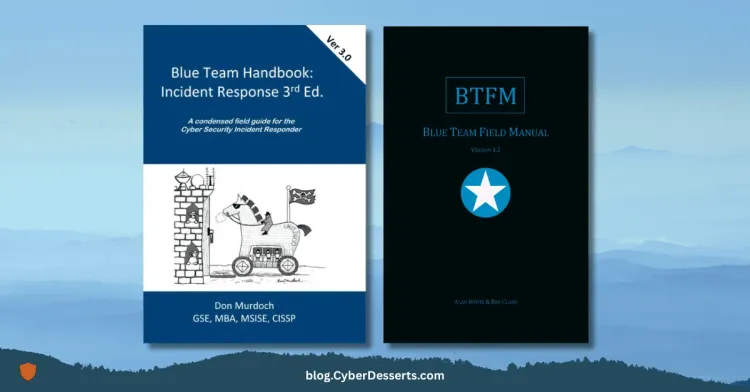
The Blue Team Books for Cybersecurity Professionals covers titles specifically structured around ATT&CK methodology if you are building this foundation from scratch.
How AI Is Changing What SOC Analysts Need to Know
This is the part most candidates preparing for SOC roles in 2026 are underestimating.
Mogilin describes the shift directly. AI now handles initial alert triage, deciding which events are worth surfacing to analysts and enriching them with context from connected incidents. The consequence is significant. Analysts are no longer primarily alert processors. They are expected to be hypothesis-driven, capable of reasoning about what an attacker is trying to do.
Malik frames it from the hiring perspective. Analysts are expected to think critically about context and patterns rather than following playbooks. The role is shifting from reacting to alerts toward understanding attacker behaviour and making smarter decisions faster.
The ISC2 data supports this direction of travel. 72% of cybersecurity professionals believe AI will create the need for more strategic roles. 73% say it will require more specialised skills. 70% have already started pursuing AI qualifications to remain relevant (ISC2, 2025).
This is not the AI-replaces-analysts story the market narrative keeps recycling. I covered the real engineering constraints in Will AI Replace SOC Analysts? The short version: AI raises the floor of what every analyst is expected to bring, it does not lower the ceiling.
What Impresses Hiring Managers in a SOC Analyst Interview
Calm problem solving under pressure came up across multiple responses. Malik notes the analysts who succeed stay focused, communicate clearly with their team, and do not jump to conclusions before checking the evidence. That last point matters more than it sounds. Alert fatigue pushes analysts toward over-triaging in one direction or missing genuine threats in the other. Staying methodical under pressure is a skill. Hiring managers test for it.
Mogilin looks for willingness for self-development. The SOC environment changes fast, and analysts who invest in their own learning independently grow into senior roles faster. That tells a hiring manager not just current ability but future value.
The X-factor Malik identifies is curiosity. The best analysts keep digging when something feels slightly off. That instinct to question small signals is what leads to discovering real threats before they become incidents.
How to Build SOC Analyst Skills Before Your Interview
The clearest path from this research is hands-on practice with real tools, combined with deliberate study of how attackers actually operate.
Build a SIEM environment and practice walking through alerts before your interview. The ELK Stack Security Monitoring Tutorial gives you the setup. Work through a few MITRE ATT&CK threat actor profiles and try to map their techniques to detection scenarios. Take the coding question seriously. Basic scripting ability separates candidates who understand the modern SOC from those who do not.
For a structured view of how these skills map to a full career path, the Cybersecurity Skills Roadmap covers the progression from entry level through to senior roles, with specific skill milestones at each stage.
Summary
One consistent finding: the skills crisis in cybersecurity is about capability mismatch, not headcount. 59% of organisations now report critical or significant skills gaps (ISC2, 2025), and what is missing is not more certified candidates. It is analysts who can reason, communicate, and adapt.
The technical floor is real log analysis, hands-on SIEM and XDR experience, and MITRE ATT&CK fluency. The soft skills that get you hired are curiosity, calm under pressure, and genuine appetite for independent learning. And across every perspective, AI is not replacing the analyst. It is raising the baseline of what every analyst is expected to bring.
The candidates standing out in 2026 are not the ones with the longest certification list. They are the ones who understand attacker behaviour, ask better questions, and keep digging when something feels slightly off.
Weekly practical security content. No vendor pitches, no fluff.
Last updated: March 2026
This article is part of our Cybersecurity Careers series. See the complete guide: Cybersecurity Skills Roadmap
References and Sources
- ISC2. (2025). 2025 ISC2 Cybersecurity Workforce Study. 59% of organisations report critical or significant skills needs (up from 44% in 2024). Top five hiring manager priorities are all nontechnical: problem solving (29%), collaboration (24%), communication (22%), willingness to learn (20%), strategic thinking (16%). 72% believe AI will create more strategic cybersecurity roles. 73% say AI will create more specialised cybersecurity skills. 70% have or are pursuing AI qualifications. Survey of 16,029 cybersecurity practitioners, conducted July–August 2025. isc2.org/Insights/2025/12/2025-ISC2-Cybersecurity-Workforce-Study
- Ilia Mogilin, Security Operations Engineer. linkedin.com/in/mogilin
- Chandra Sekhar Muppala, Senior Manager Cybersecurity and Operations, Infosprint Technologies. linkedin.com/in/cmupalla
- Omer Malik, CEO, ORM Systems. linkedin.com/in/omer-raza-malik-



Member discussion